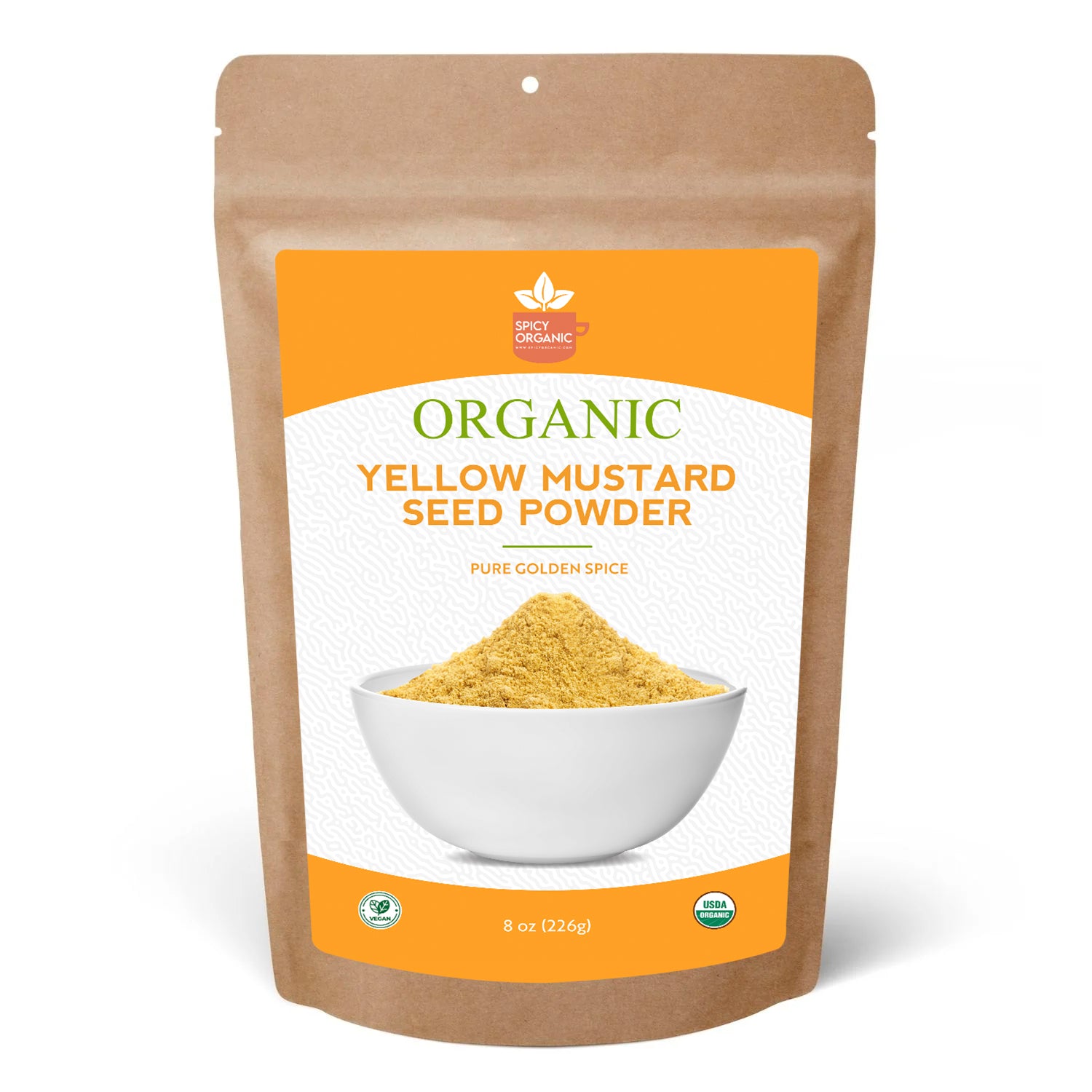
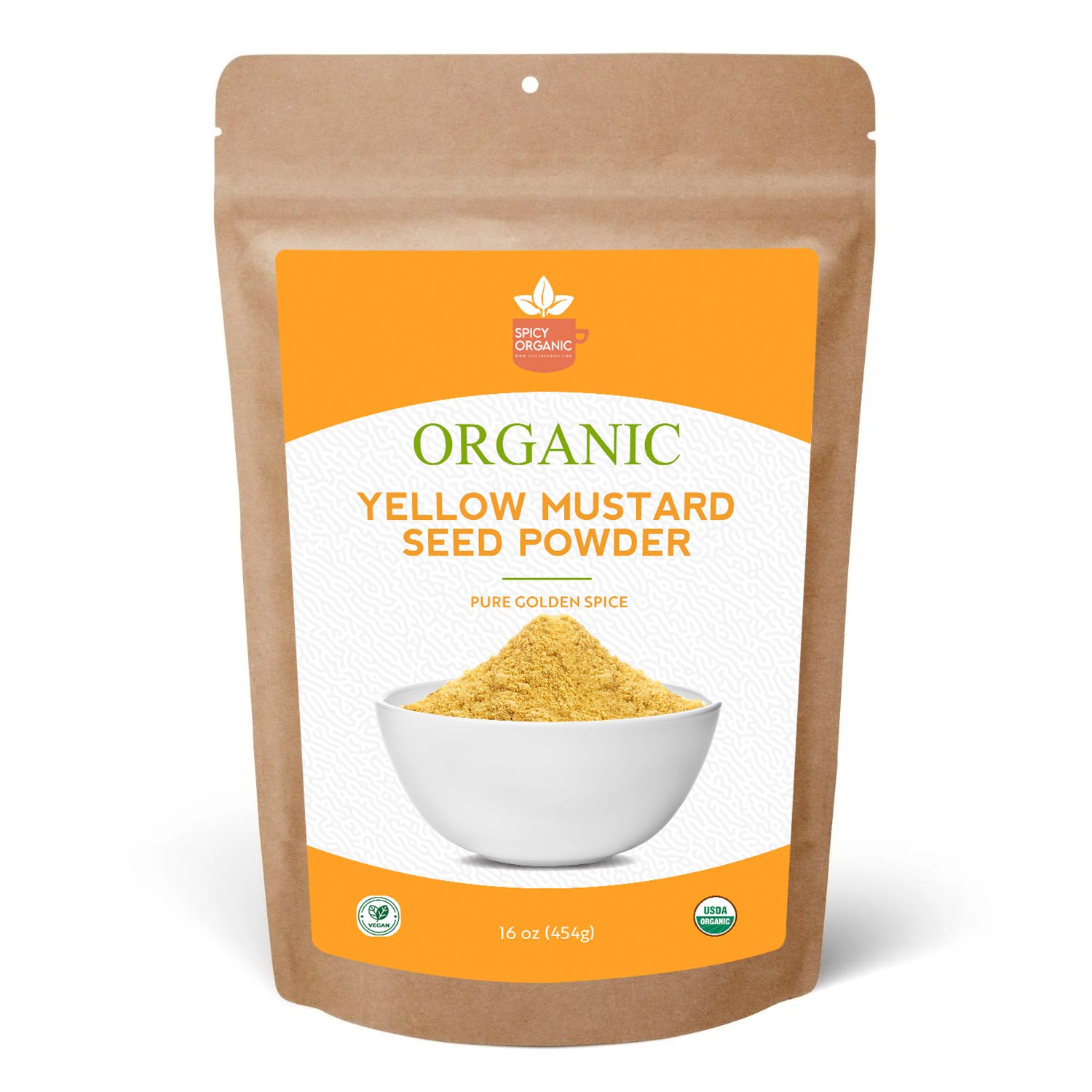
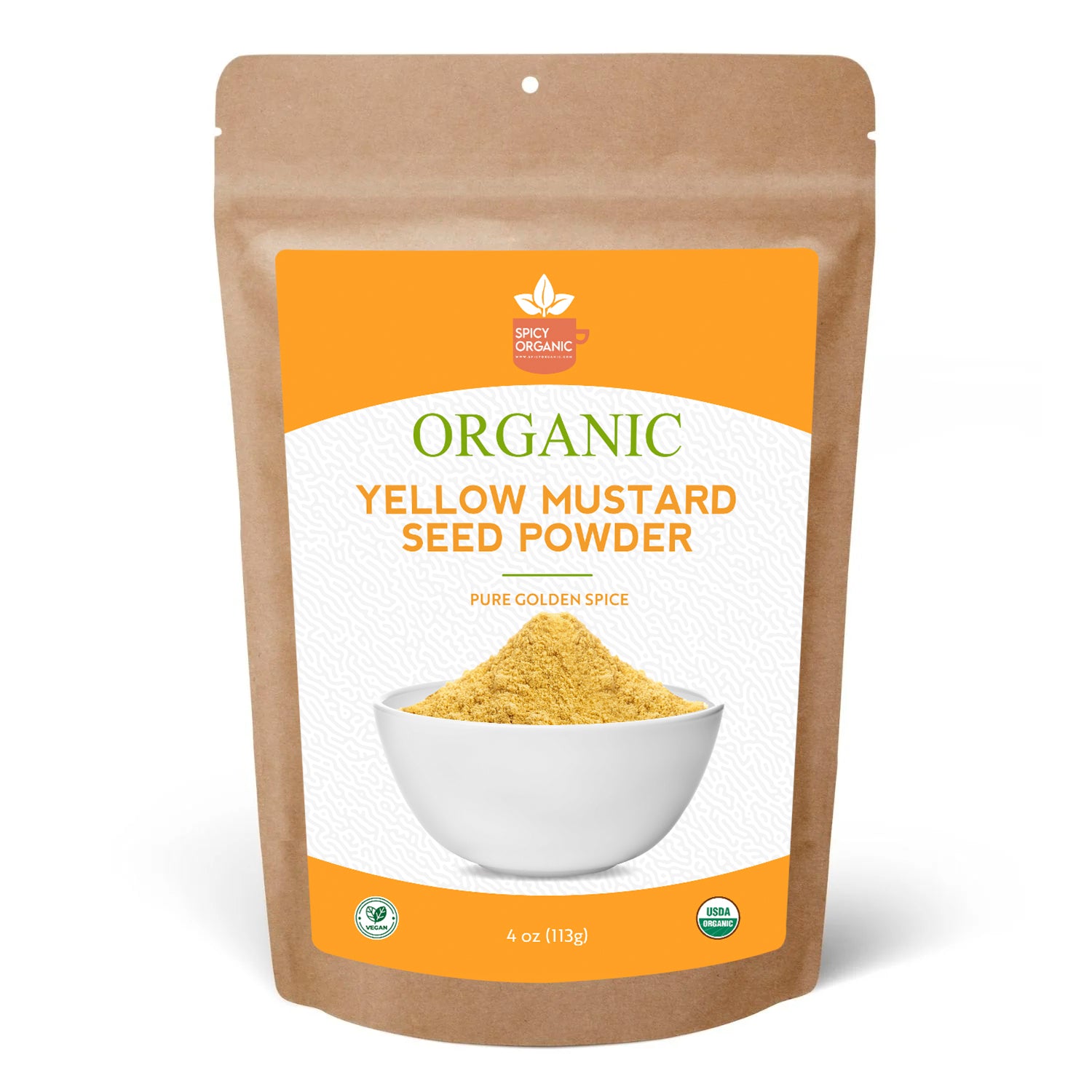
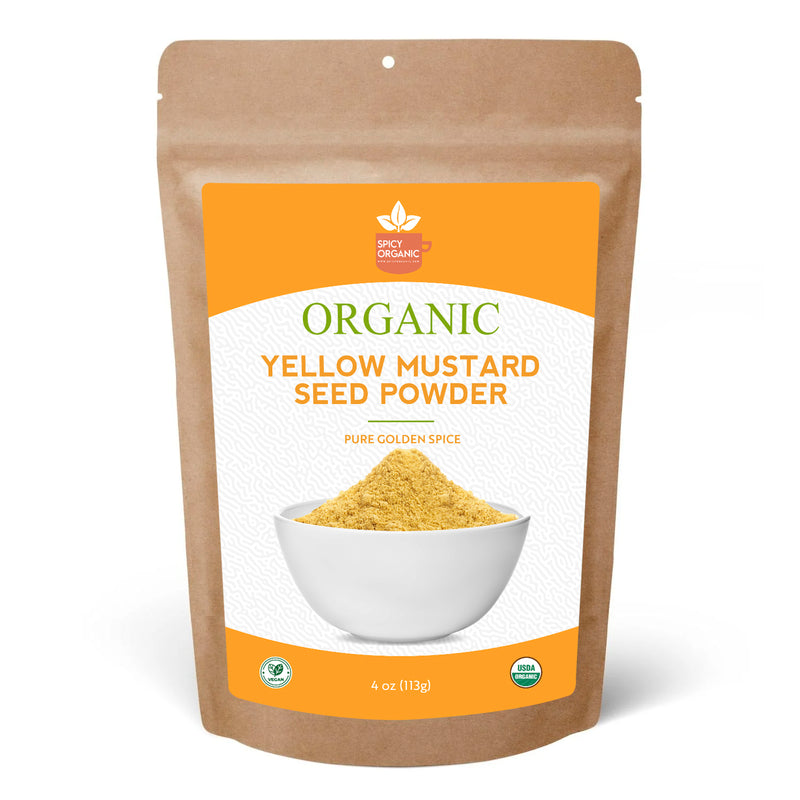
Organic Indian Yellow Mustard Seed Powder- Certified USDA Organic - Ground from Dried Organic Seeds
Organic Indian Yellow Mustard Seed Powder — known as sarson powder or rai powder in North Indian cooking — is ground from whole Brassica juncea seeds, the mustard variety that has shaped the flavor of North Indian, Punjabi, and Bengali cuisine for centuries. Milder and more complex than black mustard powder, yet more pungent and aromatic than American-style yellow mustard, this is the intermediate mustard — the one used in sarson ka saag, traditional achar (Indian pickles), and the mustard-forward fish dishes of Bengal. Sourced from certified organic farms in the mustard heartland of Rajasthan, India. USDA Certified Organic, Non-GMO, and gluten-free.
✓ USDA Certified Organic | ✓ Non-GMO | ✓ Gluten-Free | ✓ Vegan | ✓ Brassica juncea — Indian Mustard | ✓ Sourced from Rajasthan, India
Indian yellow mustard vs. black mustard vs. white mustard — understanding the difference
There are three primary mustard species used in cooking, each with distinct flavor profiles and culinary traditions. Understanding which one you need makes all the difference:
- Indian yellow mustard / brown mustard (Brassica juncea — this product) is the workhorse of North Indian and Bengali cooking. It produces a pungent, moderately sharp flavor that is more complex than white mustard but more rounded than black. The seeds are reddish-brown to tan (despite being called "yellow mustard" in the Indian context). Ground into powder, it integrates smoothly into curry bases, pickles, and mustard pastes. This is the sarson of sarson ka saag.
- Black mustard (Brassica nigra) is the most pungent and sharp of the three — used in South Indian tempering (tadka) where whole seeds pop in hot oil, and in very bold mustard condiments. See our Organic Black Mustard Seed Powder for that variety.
- White/yellow mustard (Sinapis alba) is the mildest — the basis of American yellow mustard condiment and classic bread-and-butter pickle brines. See our Organic Yellow Mustard Seeds for that variety.
When to choose Indian yellow mustard powder (B. juncea): North Indian cooking, sarson ka saag, traditional achar, Bengali mustard paste dishes, and any recipe specifically calling for Indian or brown mustard powder.
Sarson ka saag — the signature dish
Sarson ka saag (mustard greens curry) is one of the most beloved winter dishes in Punjabi and North Indian cuisine — a thick, intensely flavored curry made from mustard greens, spinach, and bathua, finished with ghee, garlic, and ginger. Mustard powder is added during cooking to deepen and intensify the mustard character of the greens:
- Classic sarson ka saag (serves 4–6): Use 1–2 tsp Indian yellow mustard powder stirred into the cooked greens alongside makki di roti (cornbread). The powder amplifies the mustard flavor of the fresh greens and gives the saag its characteristic pungent depth. Add it after the greens are cooked, stir well, and simmer 5 minutes before finishing with a tadka of ghee, garlic, red chili, and ginger.
- Quick version: If using only spinach without fresh mustard greens, increase mustard powder to 1½–2 tsp to compensate for the missing fresh mustard flavor. Add ½ tsp fenugreek powder alongside for additional depth.
Indian pickles (achar) — the traditional use
Indian mustard powder is an essential ingredient in traditional achar — the intensely spiced, oil-preserved pickles that are served alongside every Indian meal. The powder provides both flavor and natural preservation properties:
- Aam ka achar (mango pickle) spice paste: Combine 3 tbsp Indian yellow mustard powder + 2 tbsp red chili powder + 1 tbsp turmeric + 1 tbsp fenugreek powder + 1 tbsp salt. Mix with mustard oil into a thick paste. Toss with green mango pieces, pack into a sterilized jar, cover with more mustard oil, and mature in sunlight for 3–7 days. The mustard powder is the foundational flavoring.
- Nimbu ka achar (lemon pickle): Use 2 tbsp mustard powder in the spice blend alongside cumin, fenugreek, and red chili. The mustard acts as both flavoring and natural preservative in oil-based pickles.
- Mixed vegetable pickle: Add 1–2 tbsp mustard powder per kg of vegetables — carrots, cauliflower, green chili — for the characteristic sharp, pungent achar flavor.
Bengali mustard paste cooking
In Bengali cuisine, mustard paste (shorshe bata) made from ground mustard seeds is the defining flavor of some of the most celebrated dishes in the tradition:
- Shorshe maach (mustard fish curry): Blend 2 tbsp Indian yellow mustard powder + 1 tbsp black mustard powder with water, green chili, and salt into a smooth paste. Cook fish pieces in this paste with turmeric, mustard oil, and a pinch of sugar for a deeply aromatic, pungent Bengali classic.
- Shorshe ilish (hilsa in mustard sauce): The same mustard paste technique applied to hilsa fish — one of India's most prized culinary preparations.
- Mustard prawns (chingri shorshe): Use 1½ tbsp mustard powder blended into a paste with coconut milk, green chili, and turmeric for a coastal Bengali prawn preparation.
Other culinary uses — with quantities
- Curry masala base: Add ½–1 tsp to your curry spice base alongside coriander, cumin, and turmeric. Indian mustard powder adds a warm pungency that rounds out the spice profile differently from other mustard varieties.
- Homemade Indian-style mustard condiment: Combine 3 tbsp Indian yellow mustard powder + 1 tbsp apple cider vinegar + 1 tbsp water + 1 tsp turmeric + ½ tsp salt + 1 tsp honey. Mix smooth and rest 30 minutes. The turmeric gives it the characteristic golden color of Indian mustard. Refrigerate up to 3 weeks.
- Salad dressings: Whisk ½ tsp into a vinaigrette base — the pungency emulsifies oil and vinegar while adding a warm Indian mustard character.
- Dry rubs: Combine 1 tsp mustard powder with cumin, coriander, turmeric, and black pepper for an Indian-spiced dry rub for chicken or lamb.
- Spice blends: Essential component of panch phoron (Bengali five-spice) and many regional Indian masala blends.
Sourced from Rajasthan — India's mustard heartland
India is the world's largest producer of mustard seed, and Rajasthan alone accounts for approximately 40% of India's total mustard production. The Bharatpur, Alwar, and Ganganagar districts of Rajasthan produce Brassica juncea mustard of exceptional quality — the region's semi-arid climate and well-drained soils create ideal conditions for high-glucosinolate seeds with the characteristic pungency and aroma that defines Indian mustard.
Our mustard seed powder is sourced from certified organic farms in these districts, stone-ground to a fine, consistent powder, and sealed immediately to preserve the volatile pungency compounds that degrade rapidly on exposure to air and heat.
Why Spicy Organic Indian yellow mustard seed powder
- USDA Certified Organic, every batch: Cert #0847519, Texas Department of Agriculture. Grown without synthetic pesticides, herbicides, or chemical fertilizers.
- Confirmed Brassica juncea: True Indian yellow/brown mustard — the correct species for North Indian and Bengali cooking, not the milder white mustard or the sharper black mustard.
- Rajasthan-sourced premium mustard: From the world's most productive and respected mustard-growing region — high-glucosinolate seeds with the characteristic pungent intensity of authentic Indian sarson.
- Finely ground: Smooth, consistent powder dissolves completely into pastes, sauces, and marinades with no gritty texture.
- Non-GMO and gluten-free: 100% pure ground Indian yellow mustard seeds — no fillers, no additives, no flow agents.
- Resealable stand-up pouch: Airtight seal slows oxidation of pungency compounds — critical for ground mustard which loses its heat rapidly when exposed to air.
- Packed fresh in McKinney, Texas: Shorter transit from packing to your kitchen.
Available sizes and the complete mustard family
Choose your size:
- 4 oz — ideal for occasional use or trying Indian mustard powder for the first time
- 8 oz — for regular Indian home cooks and pickle makers
- 16 oz — best value for heavy users and batch achar making
The complete Spicy Organic mustard family — each a distinct species and use case:
- Organic Black Mustard Seeds (whole, B. nigra) — for South Indian tempering, pickling, and planting
- Organic Yellow Mustard Seeds (whole, S. alba) — for American pickling, yellow mustard condiment, and planting
- Organic Black Mustard Seed Powder (ground, B. nigra) — sharper, for Dijon-style mustard and bold curry pastes
Need bulk quantities? Visit our wholesale page for 5 lb to 44 lb pricing.
Storage and shelf life
Store in a cool, dry place away from heat, moisture, and direct sunlight. Keep the resealable pouch tightly sealed — ground mustard powder loses its pungency rapidly on exposure to air as the volatile isothiocyanate compounds oxidize. Indian yellow mustard powder retains peak flavor and heat for 1–2 years when properly stored. The freshness test: fresh mustard powder has a sharp, immediately pungent aroma when opened. Flat or weak aroma indicates oxidation — time to replace. Do not store near heat sources.
Product details
- Botanical name: Brassica juncea
- Common names: Indian yellow mustard powder, brown mustard powder, sarson powder (Hindi), rai powder
- Origin: India (Rajasthan — Bharatpur, Alwar, Ganganagar districts)
- Form: Finely ground powder
- Color: Pale yellow to light tan
- Flavor profile: Moderately pungent, warm, slightly earthy — more complex than white mustard, milder than black mustard
- Certifications: USDA Organic (Cert #0847519), Non-GMO, Gluten-Free, Vegan
- Packaging: Resealable stand-up pouch
- Available sizes: 4 oz, 8 oz, 16 oz
- Certifying body: Texas Department of Agriculture
- Packed in: McKinney, Texas, USA
- Shelf life: 1–2 years, properly stored
Frequently asked questions
What is Brassica juncea and how is it different from other mustards?
Brassica juncea is Indian yellow mustard (also called brown mustard) — the intermediate variety between the mild white mustard (Sinapis alba) and the sharp black mustard (Brassica nigra). It produces a moderately pungent, warm, complex flavor that is the defining mustard of North Indian, Punjabi, and Bengali cuisines. It is the sarson of sarson ka saag, the mustard in traditional achar, and the shorshe in Bengali mustard paste dishes. We carry all three mustard varieties as separate products.
Can I use this mustard powder to make sarson ka saag?
Yes — this is the correct mustard powder for sarson ka saag. Add 1–2 tsp during cooking to intensify the mustard flavor of the greens. Stir in after the greens are fully cooked, simmer 5 minutes, then finish with a ghee tadka of garlic, red chili, and ginger. If using spinach without fresh mustard greens, increase to 1½–2 tsp to compensate for the missing fresh mustard flavor.
What is the difference between Indian yellow mustard powder and regular yellow mustard powder?
"Regular" yellow mustard powder (American-style) is typically made from Sinapis alba — mild, clean, and tangy. Indian yellow mustard powder (Brassica juncea — this product) is more pungent, more complex, and more aromatic. It is the mustard of North Indian cooking, not of American hot dogs and sandwich spreads. The two are not interchangeable in Indian recipes.
How do I make Bengali mustard paste (shorshe bata) from this powder?
Blend 2 tbsp Indian yellow mustard powder with 1 tbsp black mustard powder, 1–2 green chilies, ¼ tsp salt, and just enough water to form a smooth, thick paste. Let rest 10 minutes before using — the pungency develops as the enzymatic reaction completes. Use immediately in fish curries, prawn dishes, or as a marinade. Fresh-made shorshe bata is more pungent than powder used directly in cooking.
How long does Indian yellow mustard powder stay fresh?
Ground mustard powder retains peak pungency for 1–2 years when stored sealed in a cool, dry place away from heat and moisture. Exposure to air accelerates oxidation and loss of the volatile pungency compounds. A sharp, immediately pungent aroma when you open the pouch indicates freshness. Flat or weak aroma means the pungency has oxidized — the powder is still usable but significantly less flavorful.
Is Spicy Organic Indian yellow mustard powder USDA certified organic?
Yes. Our Organic Indian Yellow Mustard Seed Powder is USDA Certified Organic under Regulations 7 CFR Part 205, Certificate Number 0847519, issued by the Texas Department of Agriculture. Confirmed Brassica juncea, sourced from certified organic farms in Rajasthan, India. Non-GMO, gluten-free, vegan, and 100% pure ground Indian yellow mustard seeds with no additives or fillers.