Organic Amla Powder – Sun-Dried Indian Gooseberry
$9.98
Spicy Organic



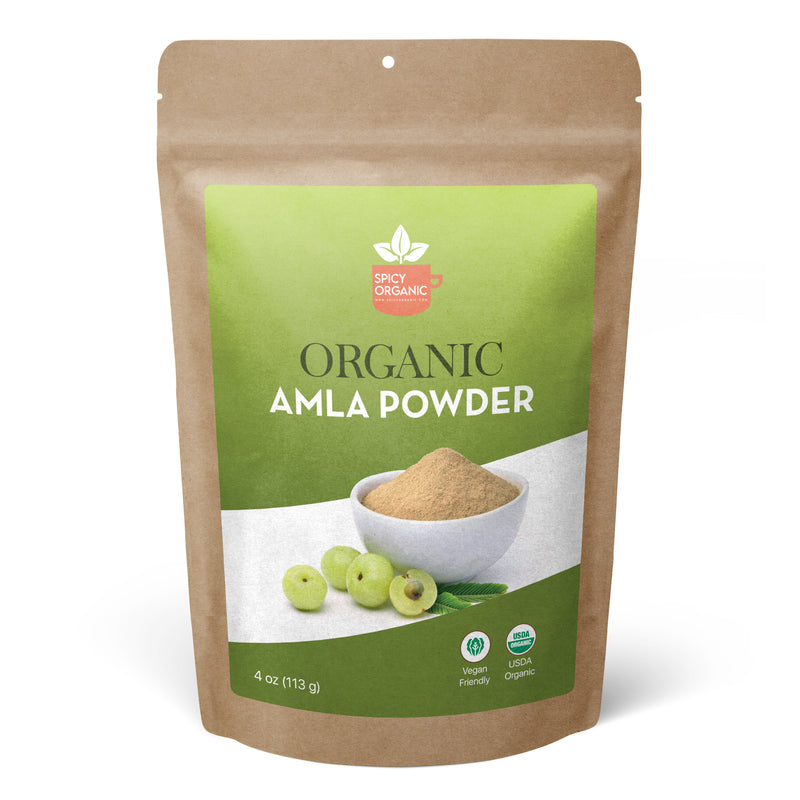

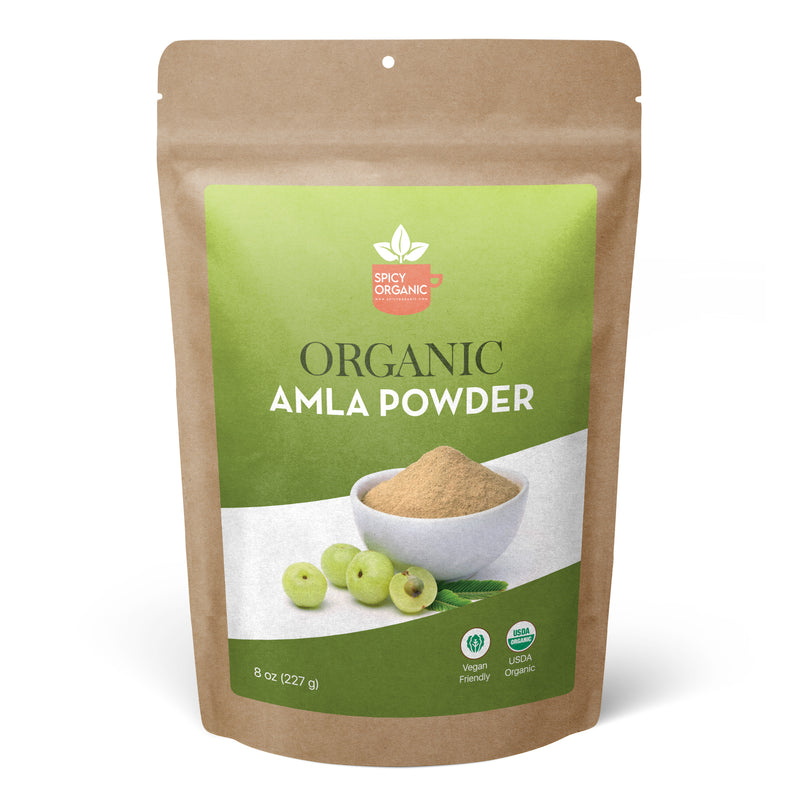

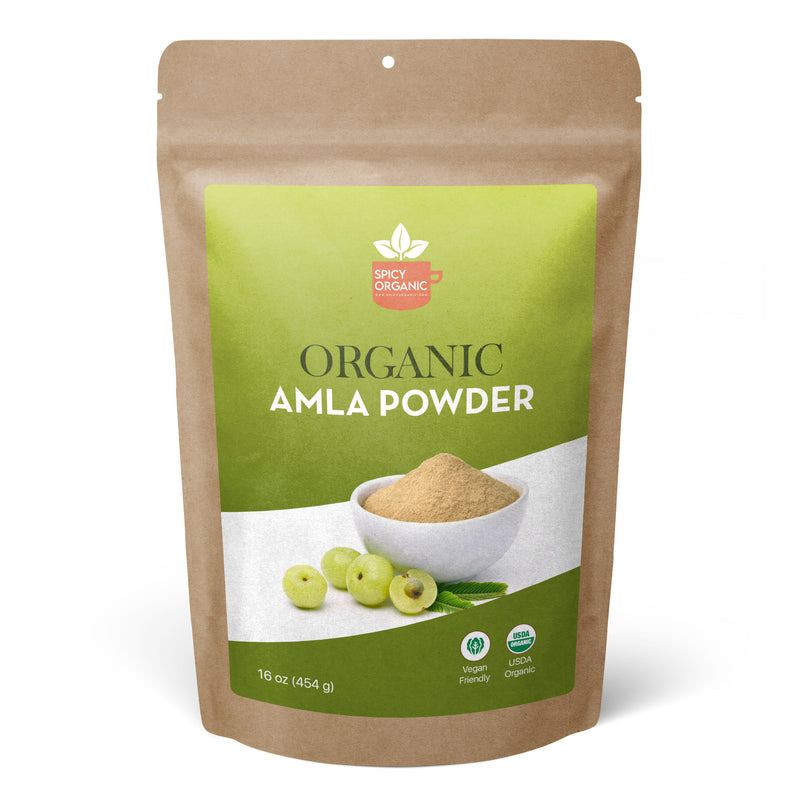


Organic Amla Powder — made from sun-dried Indian gooseberries (Phyllanthus emblica), traditionally known as Amalaki in Ayurveda — is one of the most revered plants in Indian traditional medicine. The Indian gooseberry is extraordinary among plant foods: it contains one of the highest natural concentrations of Vitamin C of any fruit in the world, remains stable through drying (unlike most Vitamin C-rich fruits), and has been used in Ayurvedic hair care, skincare, and wellness preparations for over 5,000 years. Sourced from certified organic farms in India, sun-dried to preserve its natural tart potency, finely ground, and tested for heavy metals. USDA Certified Organic and Non-GMO.
✓ USDA Certified Organic | ✓ Non-GMO | ✓ Heavy Metal Tested | ✓ No Preservatives or Additives | ✓ Sun-Dried — Vitamin C Preserved | ✓ Sourced from India
Amla (Indian gooseberry, Phyllanthus emblica) is a small, pale green fruit native to the Indian subcontinent. In Sanskrit, amalaki means "the sustainer" — a name that reflects its central role in Ayurvedic medicine as one of the most important rasayana (rejuvenating) herbs. It is one of three fruits in the celebrated Ayurvedic formula Triphala, used for centuries as a comprehensive wellness preparation.
What makes amla scientifically remarkable is its Vitamin C profile. Fresh amla fruit contains 600–900mg of Vitamin C per 100g — compared to approximately 50mg in oranges — making it one of the most concentrated natural sources available. Crucially, amla's Vitamin C is unusually heat-stable due to its tannin content (tannins protect the ascorbic acid during processing and drying), meaning the powder retains meaningful Vitamin C levels even after sun-drying and grinding.
Amla has been used in South Asian hair care for thousands of years — as an oil infusion, hair mask, scalp treatment, and rinse. Its Vitamin C content and natural tannins are believed to support scalp health, strengthen hair strands, and promote shine. Here are the most widely used traditional preparations:
Classic amla hair mask (for all hair types):
Amla, neem, and aloe vera scalp treatment:
Amla and shikakai hair mask (traditional South Indian formula):
Amla-infused hair oil:
Amla has been consumed as a food and wellness ingredient in India for millennia — eaten fresh, dried, pickled, juiced, and as powder. Here are the most common internal uses:
These statements have not been evaluated by the Food and Drug Administration. This product is not intended to diagnose, treat, cure, or prevent any disease. Consult a qualified healthcare professional for therapeutic guidance.
The Indian gooseberry is native to the Indian subcontinent and has been cultivated across India for thousands of years. Major growing regions include Uttar Pradesh (particularly the Pratapgarh district, which produces the majority of India's commercial amla), Madhya Pradesh, and Rajasthan. Our amla is sourced from certified organic farms in these regions — hand-harvested at peak ripeness in winter (October–February, when Vitamin C content is highest), then sun-dried using traditional methods that preserve the fruit's natural tannin profile and active compounds before fine milling.
Available in an 8 oz resealable stand-up pouch.
Amla powder pairs naturally with the other Ayurvedic wellness powders in our catalog:
Need bulk quantities for your Ayurvedic brand, hair care line, or supplement business? Visit our wholesale page for 5 lb to 44 lb pricing.
Store in a cool, dry place away from moisture, heat, and direct sunlight. Keep the resealable pouch tightly sealed — amla powder's natural Vitamin C content oxidizes on prolonged exposure to air and light. Properly stored, organic amla powder retains peak quality for 2 years. Avoid humid storage environments — moisture causes clumping (the powder is still usable if clumped; break apart with a dry spoon). Always use a completely dry measuring spoon to prevent moisture entering the pouch.
What is amla powder and what is it used for?
Amla powder is made from sun-dried Indian gooseberries (Phyllanthus emblica), one of the most Vitamin C-rich fruits in the world. It has two primary use areas: hair care (applied topically in masks and oil infusions as part of traditional Ayurvedic beauty routines) and internal wellness (consumed as a tonic, in smoothies, or as a culinary souring agent). It has been used in Indian traditional medicine for over 5,000 years under the Sanskrit name Amalaki.
How do I use amla powder for a hair mask?
Mix 2 tablespoons amla powder with enough warm water to form a smooth paste (approximately 3–4 tbsp). Apply to scalp and hair roots, leave 30–45 minutes, then rinse thoroughly and shampoo. Use once weekly. For an enhanced treatment, combine with neem powder and aloe vera powder for the classic triple-herb Ayurvedic scalp formula. Note: amla's green-brown color may temporarily tint very light or grey hair — rinse thoroughly to remove.
How much amla powder should I consume per day?
For internal use, ½ to 1 teaspoon per day in water, juice, or smoothies is a commonly used range. Stir into warm water with honey and lemon for a traditional morning tonic. Amla is intensely tart — start with ½ tsp and adjust to taste. Consult a qualified healthcare professional for therapeutic guidance. These statements have not been evaluated by the FDA.
Why is amla powder so tart?
Amla's intense tartness comes from its extraordinarily high Vitamin C content (600–900mg per 100g of fresh fruit) combined with natural tannins and organic acids (gallic acid, ellagic acid). The tartness is the taste of genuine, unprocessed amla — it is the quality indicator that tells you the Vitamin C is intact. Sweetened or mild-tasting amla products have typically been processed in ways that reduce the active compound concentration.
Why is heavy metal testing important for amla powder?
Like aloe vera, amla can absorb compounds from the soil it grows in. Third-party heavy metal testing (lead, arsenic, cadmium, mercury) confirms the powder meets safety standards before packaging. This is an additional quality step beyond organic certification — organic certification covers farming practices but not necessarily the mineral profile of the final product. Our testing gives you confidence in what goes into your hair and body.
Is Spicy Organic amla powder USDA certified organic?
Yes. Our Organic Amla Powder is USDA Certified Organic under Regulations 7 CFR Part 205, Certificate Number 0847519, issued by the Texas Department of Agriculture. Sourced from certified organic farms in Uttar Pradesh, India. Non-GMO, heavy metal tested, and 100% pure amla fruit powder with no preservatives, additives, or fillers.